Turn on a faucet, and clean water comes out. Flush a toilet, and wastewater disappears. It seems simple, but there’s an entire industry of people dedicated to keeping these critical services running. It’s meaningful work that protects the environment and people’s health.
Make a difference
Working in water makes a real difference in people’s lives every day. You’ll be joining a community of water people who care about each other, what they do, and the environment. It’s essential work done by skilled people who understand that what they do matters to their community, the environment, and people’s health.
Water and wastewater utilities across South Carolina are actively hiring, and they’re looking for people who are ready to learn, not just people who already have years of experience. Here’s what most operator positions offer:
Paid, on-the-job training
You don’t need a college degree or prior experience to start. Most utilities provide hands-on training from day one and cover the cost of your licensing exams. You earn while you learn.
A path with growth opportunities
As you gain experience and earn higher-level licenses, your options and earning potential grow. Many utility operators are nearing retirement, providing growth opportunities for the next generation of operators.
Stability and benefits
Water utilities provide essential services. They don’t downsize or move overseas. Utilities are known for strong benefits, including health insurance, retirement plans, and job security that’s hard to match.
Good pay
Pay varies by license level, experience, and utility. Most operators in South Carolina earn between $38,000 and $61,000 per year. With experience and higher-level licenses, many operators earn $65,000 or more.
$38K-$61K
Typical pay range for SC operators
SC Department of Employment and Workforce and Bureau of Labor Statistics, 2024
$65K
Pay with experience and higher licenses
SC Department of Employment and Workforce and Bureau of Labor Statistics, 2024
$0
Typical cost to you for training and licensing exams
Most utilities cover these costs

What operators do
There are four types of water and wastewater operators. Each specializes in a different part of the system. Some operators earn licenses in more than one area over the course of their career. Here’s what each one does.
Water treatment operator
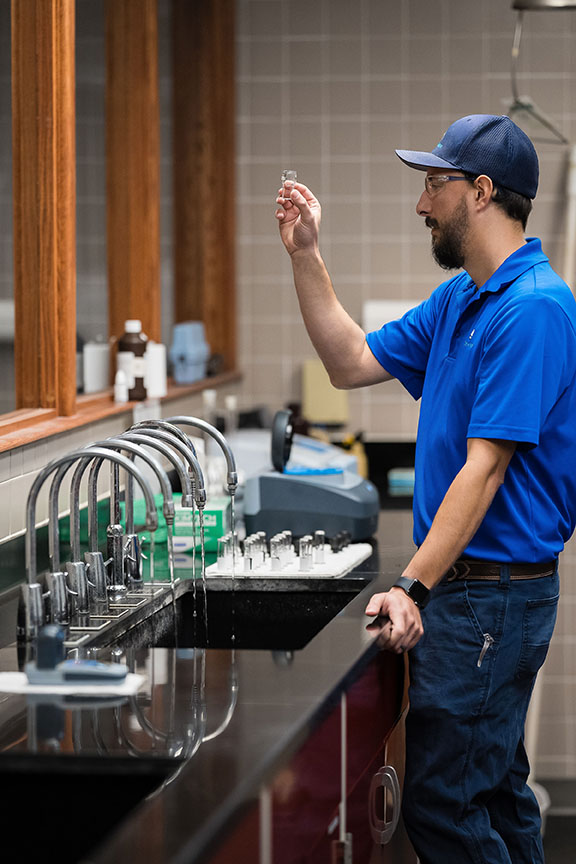
Water treatment operators run the plants that take water from rivers, lakes, and groundwater and make it safe to drink. They oversee automated systems, test water samples, check equipment, and make sure everything that leaves the plant meets state and federal drinking water standards.
Day-to-day tasks:
- Monitor treatment processes and equipment
- Collect and test water samples
- Inspect and maintain plant equipment
- Keep detailed records of plant operations
- Identify and respond to equipment issues or process changes
Water treatment operators work with the same fundamental chemistry and biology principles taught in high school science, applied to a real system that serves thousands of people every day.
Water distribution operator
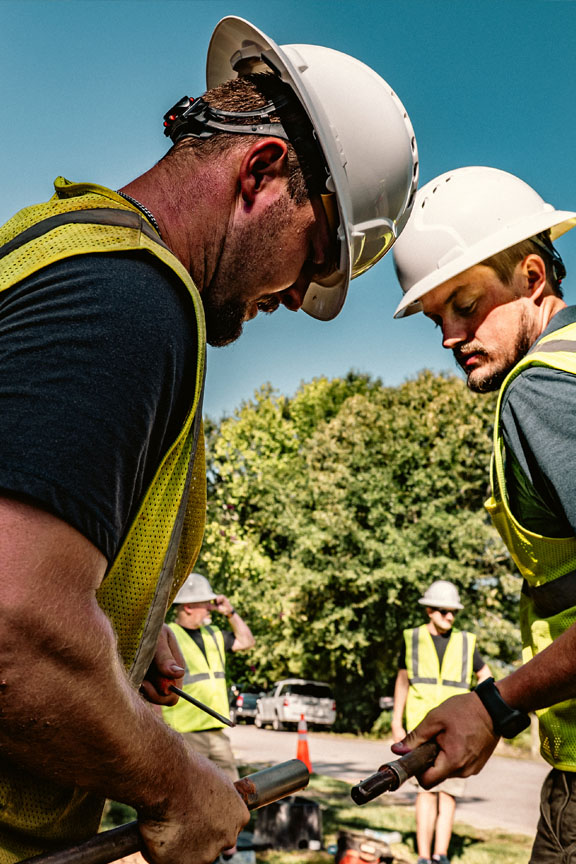
Once water is treated, it’s delivered through a network of pipes, valves, pumps, and storage tanks. Distribution operators maintain all of it, keeping water quality high and pressure consistent from the plant all the way to customers’ faucets.
Day-to-day tasks:
- Inspect and maintain pipes, pumps, valves, and tanks
- Locate and repair broken water mains
- Flush water mains to maintain quality
- Monitor system pressure and flow
- Respond to reports of leaks, water quality, or pressure issues
Fire hydrants are owned and maintained by water utilities. Distribution operators use them to flush water mains to help maintain water quality throughout the system.
Wastewater treatment operator
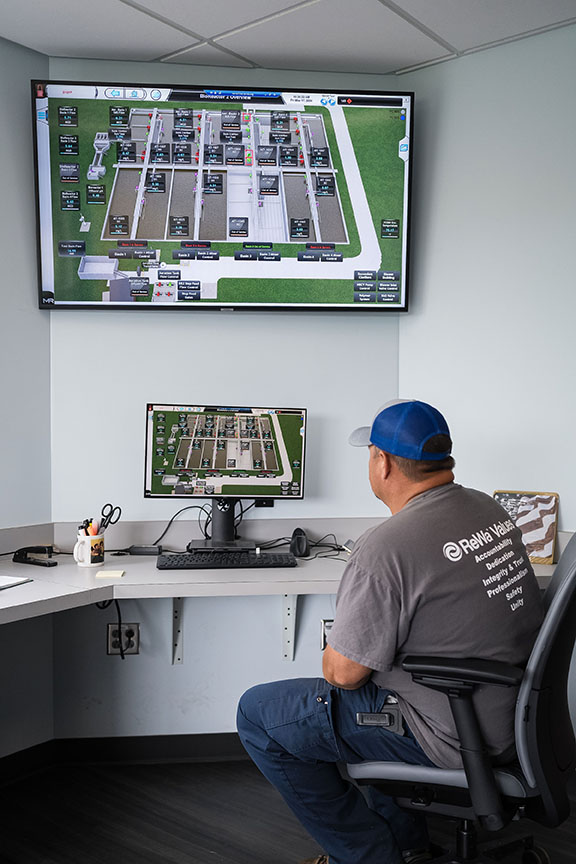
Wastewater treatment operators oversee the plants that clean water after it’s been used. They maintain the biological and physical processes that remove contaminants so treated water can be safely released back into rivers, lakes, and streams. It’s real environmental work that most people rarely think about.
Day-to-day tasks:
- Monitor biological and chemical treatment processes
- Test water samples to verify treatment effectiveness
- Inspect and maintain plant equipment
- Record operational data and prepare compliance reports
- Ensure treated water meets standards before release into waterways
Most municipal wastewater plants use living microorganisms to break down waste — a process called biological treatment. Managing that process is part science, part craft.
There are two wastewater treatment operator licenses: Biological (described above) and Physical/Chemical. Municipal wastewater treatment plants use biological processes, and therefore require operators to hold the Biological wastewater treatment operator license. The Physical/Chemical license is required for industrial facilities that pretreat wastewater to remove chemicals that may be harmful to the public wastewater system. Some utilities have pretreatment programs in which they work with industries in their service area to ensure pretreatment, so a Physical/Chemical license may be helpful or required, depending on the utility’s needs.
Collection system operator
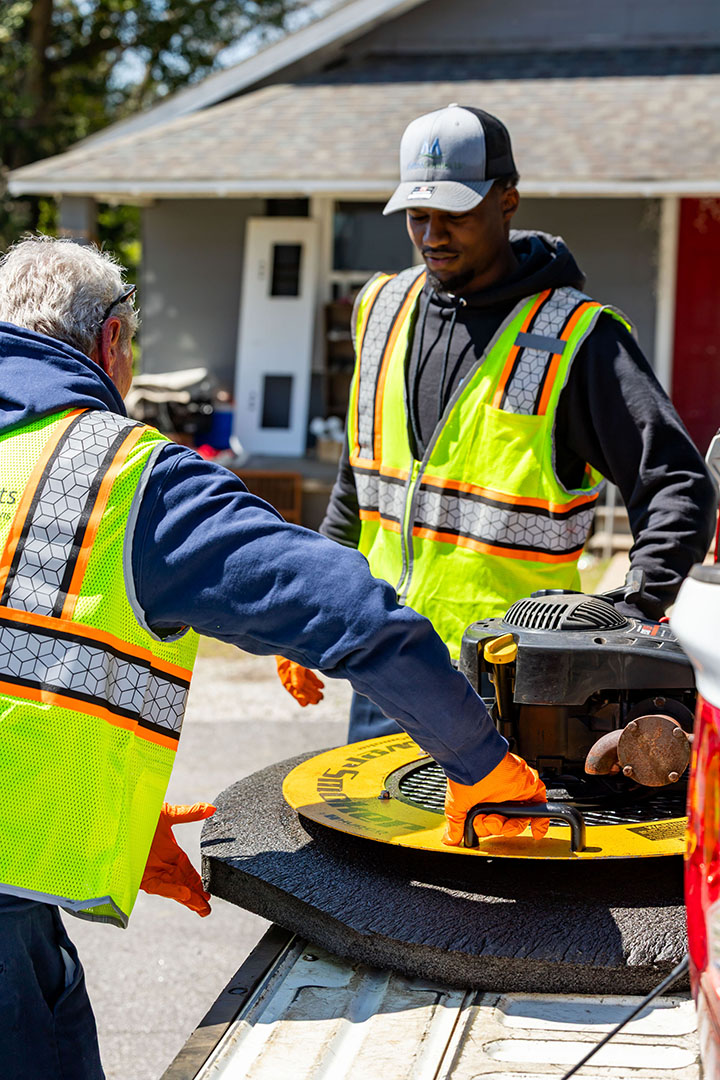
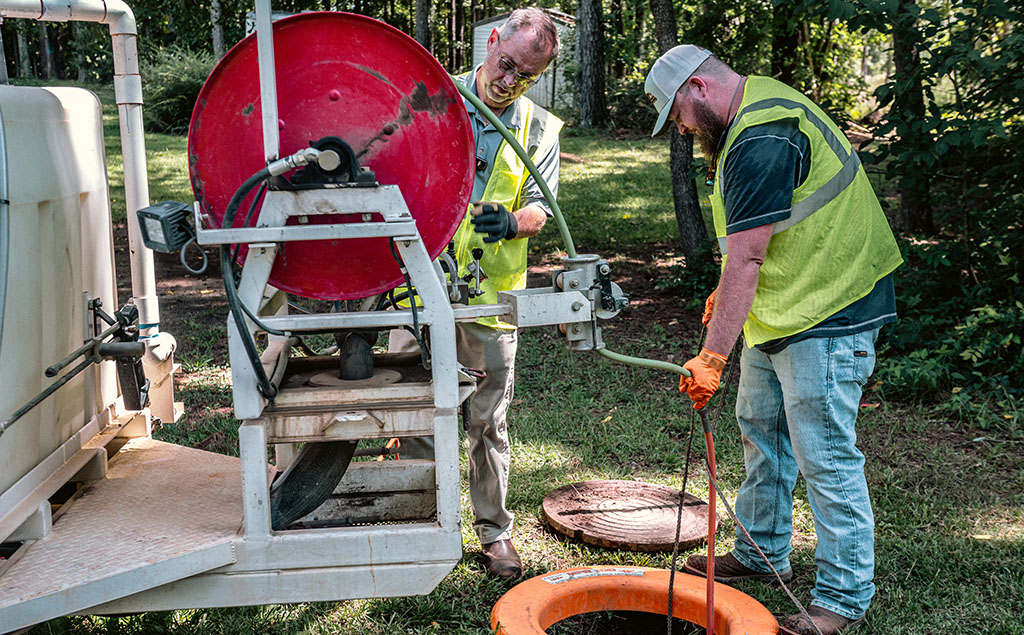
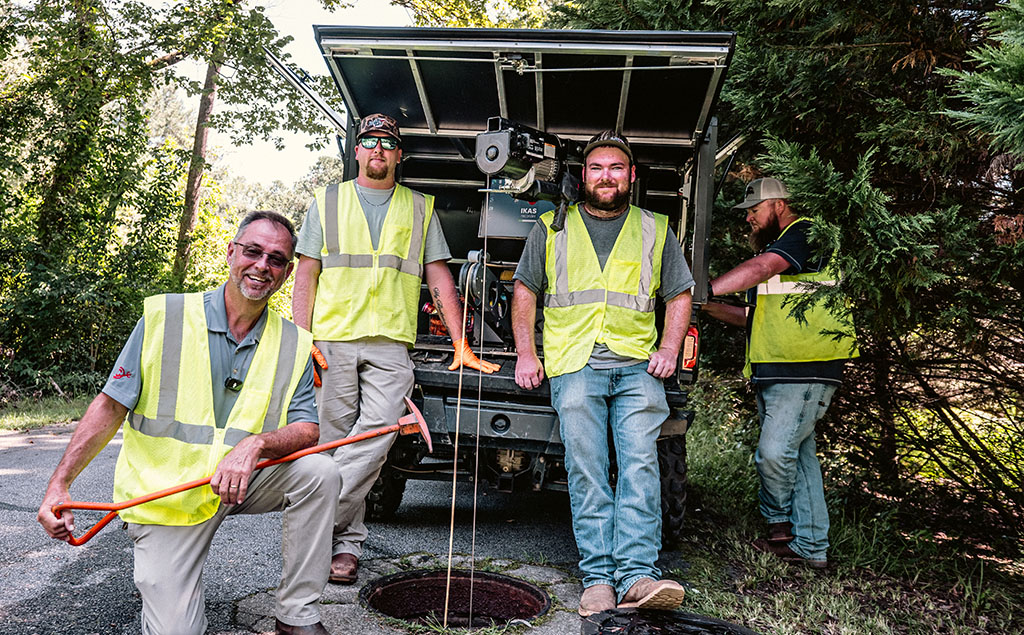
Collection system operators maintain the underground network of pipes and pump stations that moves wastewater from homes and businesses to treatment plants. Most people never think about this system until something goes wrong. Collection system operators are the reason it usually doesn’t.
Day-to-day tasks:
- Use specialized equipment to inspect and clean pipes and manholes
- Clear blockages and repair broken pipes
- Maintain and troubleshoot pump stations
- Respond to backups or overflows
- Document inspections and maintenance work
Collection system operators use several methods to find broken pipes and improper connections, including smoke testing and robotic cameras. Finding and fixing issues before they cause overflows protects public health and the environment.
How operator licensing works
South Carolina requires water and wastewater operators to hold a license for the type of system they operate.* Licenses are issued by the SC Department of Labor, Licensing and Regulation’s (LLR’s) Environmental Certification Board. Operator licenses progress through several levels based on work experience and license exam results.
The levels run from Trainee through D, C, B, and A — with A being the highest. Not every utility requires an A-level license, but earning one gives you the most career options and earning potential. Water treatment operators follow a slightly different sequence that starts with an E-level exam rather than D.
Most Operator Types
Trainee
D
C
B
AHighest Level
Water Treatment Operators Only
Trainee
EWater Treatment Only
D
C
B
AHighest Level
*State law doesn’t require a license for wastewater collection system operators, but there is a voluntary certification program, and many utilities require their collections operators to earn this voluntary license. The voluntary collections certification program (VCC) is administered by the Water Environment Association of SC (WEASC).
Good to know: You can take the next-level exam as soon as you pass the previous one — you don’t have to wait for required work experience to be completed. Getting the exams done early puts you ahead.
How to become an operator
The path to becoming a licensed operator follows the same basic steps regardless of which type of system you want to work on.
Wherever you're starting from, there's a way in
Select what fits your situation best.
- I'm in high school
- I'm a recent grad or career changer
- I'm a military veteran
- I'm a teacher or counselor
You don’t have to wait until after graduation to get started. Some utilities offer paid part-time opportunities for high school juniors and seniors. The SC Rural Water Association’s Pre-Apprenticeship Program connects students with local water and wastewater utilities for hands-on, paid experience.
- No prior experience required
- Get paid while you learn
- Rolling admission — apply any time
Math, science, and technology classes in high school are good preparation. So is any hands-on technical coursework.
If you’re ready to start something new, water and wastewater utilities are actively hiring. In many cases, you don’t need experience, just a high school diploma or GED, a driver’s license, and a willingness to learn. The rest happens on the job.
- Search for “Operator in Training” on job boards
- Ask about apprenticeship programs when you apply
- Training and exam costs are covered by most utilities
The SC Rural Water Association’s Apprenticeship H2O Program is a two-year, Department of Labor-approved program combining classroom instruction with on-the-job training. Many utilities across SC participate in this apprenticeship program.
Your service translates directly to a water career. The discipline, technical skills, equipment experience, and ability to work under pressure that you developed in the military are exactly what utilities are looking for in operators.
- Military service counts toward licensing experience requirements
Experience working in water/wastewater systems is a plus, but any math/science training and mechanical work experience will be considered. You’ll need to send your Joint Services Transcript and DD214 to LLR for approval. - Strong demand statewide — utilities are actively hiring
- Stable, mission-driven work with good benefits
Water careers offer the kind of structure, purpose, and team environment that many veterans find a natural fit after service.
Water and wastewater operator careers are a good fit for students who are hands-on learners, interested in science or technology, and looking for stable work that doesn’t require a four-year degree. South Carolina utilities are actively recruiting, and they welcome connections with schools.
- Find internship and apprenticeship opportunities
- Contact your local utility and invite a water professional to speak to your class