Do your students know where the water from their faucets comes from, how it gets there, and what happens after it goes down the drain? Our water infrastructure is a real-world application of science, math, and civics, and it provides meaningful careers in every community.
Resources for Educators
Introduce Your Students to Water Careers
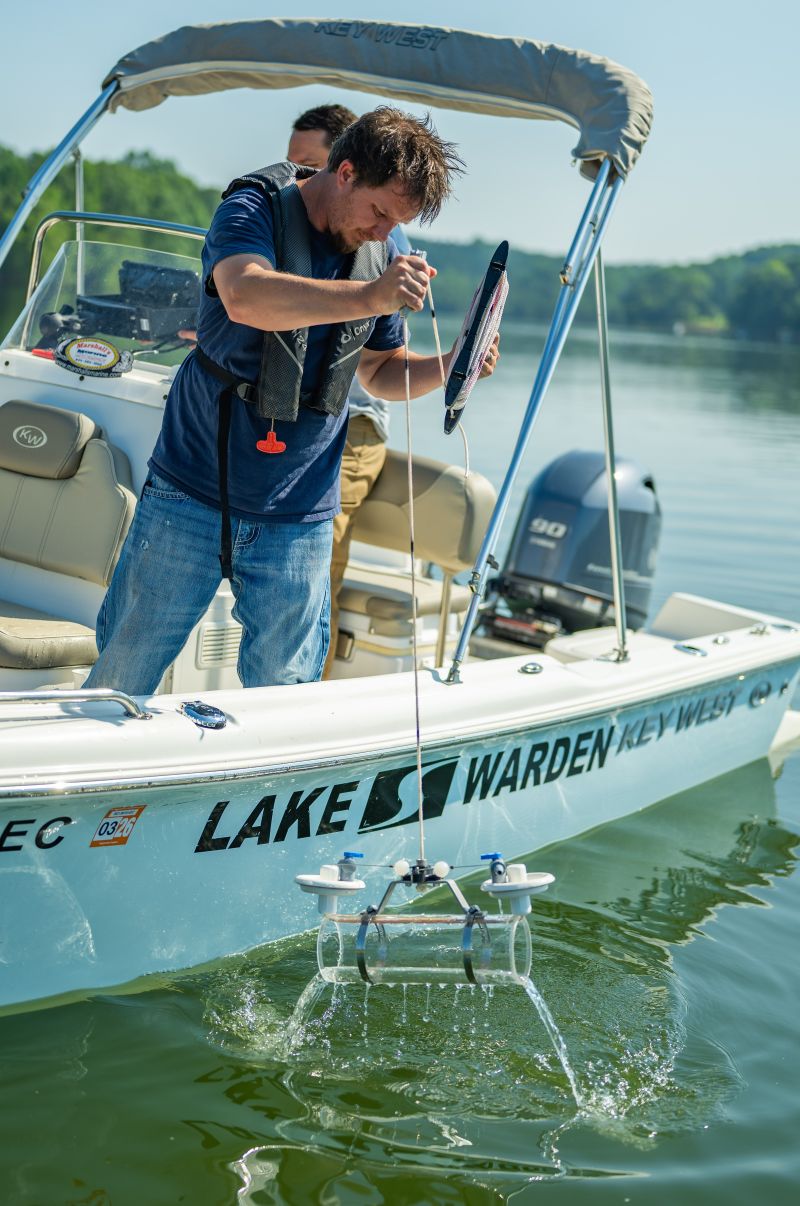
The water industry offers many career paths for students who like hands-on work, enjoy science and math, and want to do something that matters to their community.
Here are some ways to bring water careers into your classroom:
Invite a water utility representative to visit. Contact your local utility. Most are happy to send someone to talk with a class, participate in a career day, or host a tour of a treatment plant. Students (and teachers) are often surprised by what goes into the water services they rely on every day.
Share internship opportunities with students. Some utilities offer paid part-time work, internships, co-ops, or apprenticeships for high school and college students. Learn more
Water Activities & Lesson Plans
These lesson plans and activities cover water’s physical properties, the water cycle, watersheds, groundwater, pollution, and how people impact the water environment.
These are external resources, and all links open in a new tab.
Green Step Schools
Source: Environmental Education Association of SC
The Green Steps Schools program connects teachers with mentors and resources to achieve easy, sustainable school environmental projects at no cost. Through hands-on, student-led projects, educators and students work together to make their schools—and our state—cleaner, healthier, and more sustainable.
Water Education and Careers Resource Hub
Source: Environmental Finance Center Network
A searchable collection of water education curriculum, videos, and activities for K-12 educators, organized by resource type, age group, and learning objective. Covers drinking water, wastewater, and water careers.
https://efcnetwork.org/resources/educators-resource-hub/
Water Science School
Source: US Geological Survey
Lesson plans, diagrams, and activities on nearly every water topic. Includes the updated water cycle diagram (2022), which shows how human water use fits into the cycle. Use it for: a current, accurate water cycle graphic for any grade.
https://www.usgs.gov/water-science-school
Groundwater Lesson Plans
Source: Groundwater Foundation
Hands-on activities, videos, and worksheets organized by topic: groundwater, the water cycle, aquifers, and pollution. Use it for: making groundwater visible to students who have never thought about what’s under their feet.
The Characteristics of Water
Source: US Environmental Protection Agency
Seven simple experiments that help young students understand the properties of water and how pollution affects it. Part of EPA’s nonpoint source pollution education program.
https://www.epa.gov/nps/nonpoint-source-pollution-awareness-darby-duck-aquatic-crusader
Watershed Sleuth Challenge
Source: National Environmental Education Foundation
Grades: 4 to 6
A three-part online course in which students learn what a watershed is, why it matters, and what they can do to protect it. Use it for: a self-paced unit that works well for independent or small-group work.
The WATERS Project Curriculum
Source: The Concord Consortium
A 10-lesson unit combining online, classroom, and field activities to teach watershed concepts and build awareness of water careers. Use it for: a full unit that connects the science to the jobs.
https://learn.concord.org/waters
Model My Watershed and Runoff Simulator
Source: Stroud Water Research Center
Grades: Middle and high school
A free web app that lets students analyze real watershed data on a map and simulate how land use changes affect water quality. Use it for: a data-analysis lab in Earth or Environmental Science.
Watershed Academy
Source: US Environmental Protection Agency
Self-paced online training modules on water quality, stormwater, groundwater, wetlands, and more. Use it for: independent study for students interested in environmental careers, or supplemental reading for AP Environmental Science.
https://www.epa.gov/watershedacademy
Model My Watershed and Runoff Simulator
Source: Stroud Water Research Center
Grades: Middle and high school
A free web app that lets students analyze real watershed data on a map and simulate how land use changes affect water quality. Use it for: a data-analysis lab in Earth or Environmental Science.